
CCTV for industrial sites: what to consider before you buy
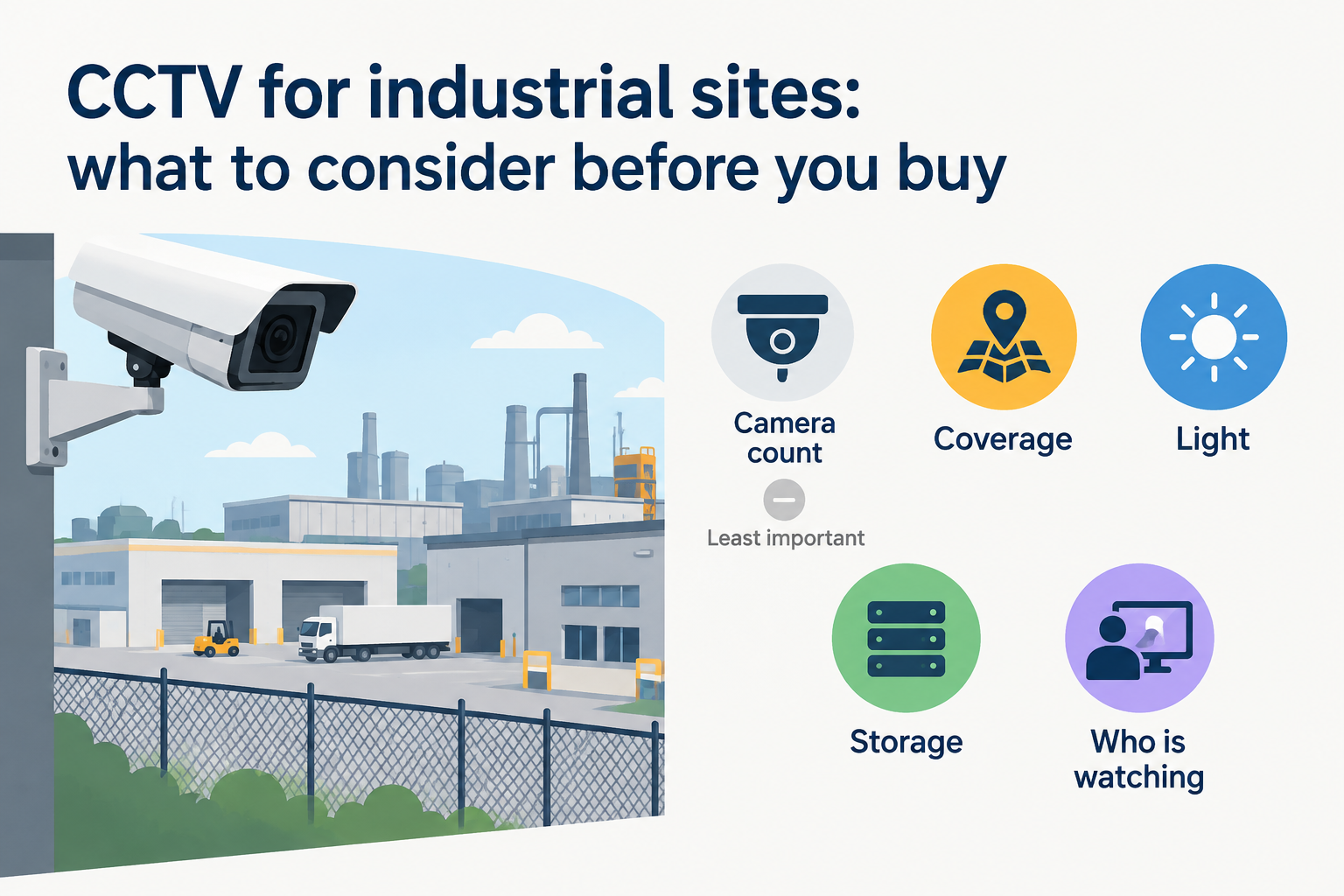
Camera count is the least important decision. Coverage, light, storage and who is watching matter far more.
Industrial CCTV fails for predictable reasons, and almost none of them are camera resolution.
Decide what each camera is for
A camera that tells you someone is present is a different camera from one that lets you identify who it was. Detection, recognition and identification each need a different pixel density on target — which in practice means a different lens and mounting distance. Specify the purpose per position before choosing hardware.
Light is the real constraint
Most incidents happen in poor light. Infrared has a genuine range limit, and pointing a camera at a gate with a floodlight behind it produces a silhouette. Assess each position at night, not at noon.
Storage is a policy decision
Retention period, resolution and frame rate together determine storage. Thirty days at full frame rate across forty cameras is a serious amount of disk. Decide the retention you need for investigations — and for any regulatory requirement — then size the recorder to it.
Network and power on a spread-out site
Industrial sites are large. Copper runs out at 100 metres; beyond that you need fibre or point-to-point wireless. Plan PoE budgets and standby power at the same time, because cameras that go down with the mains are of no use during an outage.
Someone has to watch it
Recorded footage answers questions after the event. If you need to intervene during one, you need a monitoring arrangement, analytics that raise an alert, or both.
Need this specified and quoted?
Send us your requirement and we will come back with equipment options, lead times and pricing.