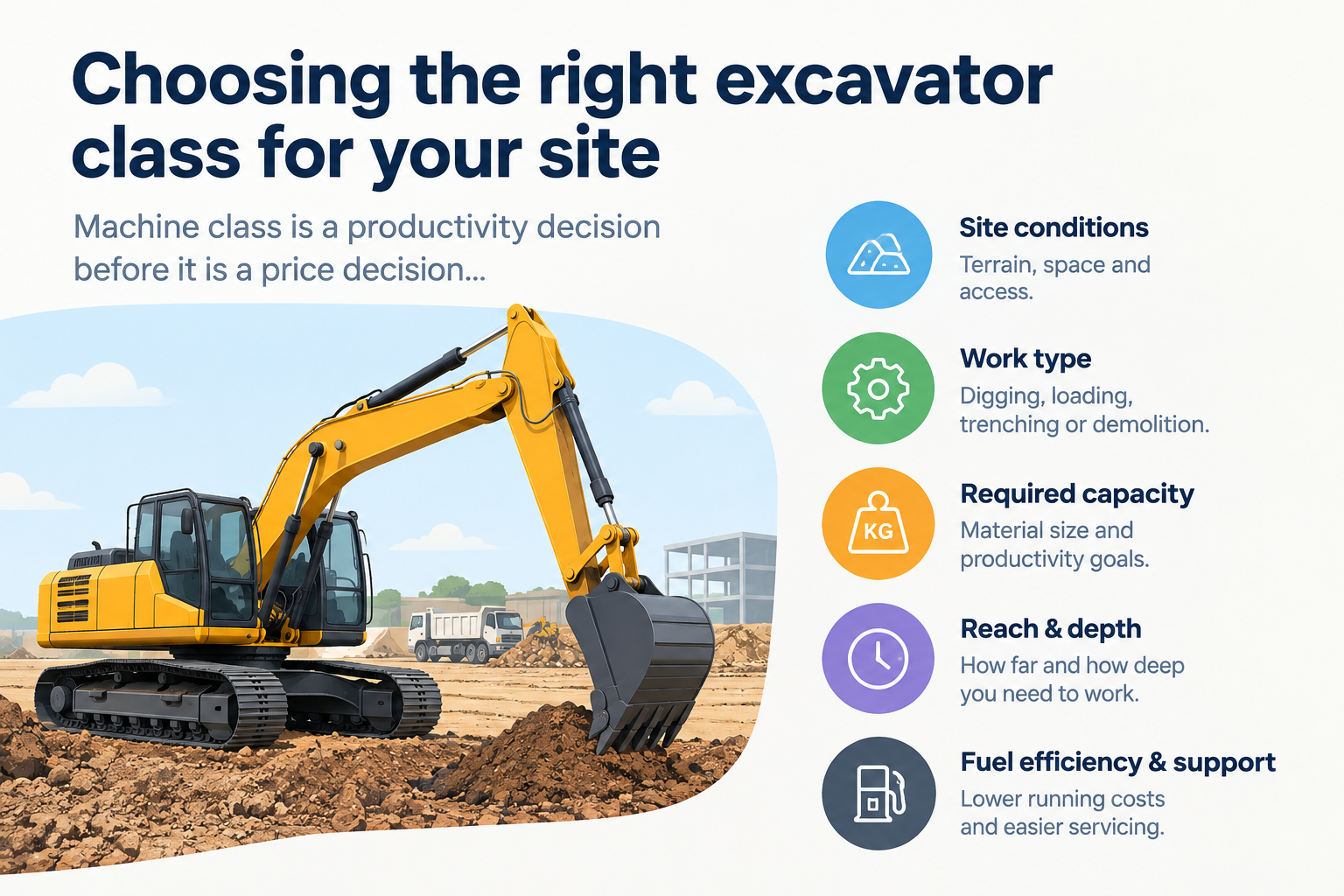
Choosing the right excavator class for your site
12 Jul 2026
Read

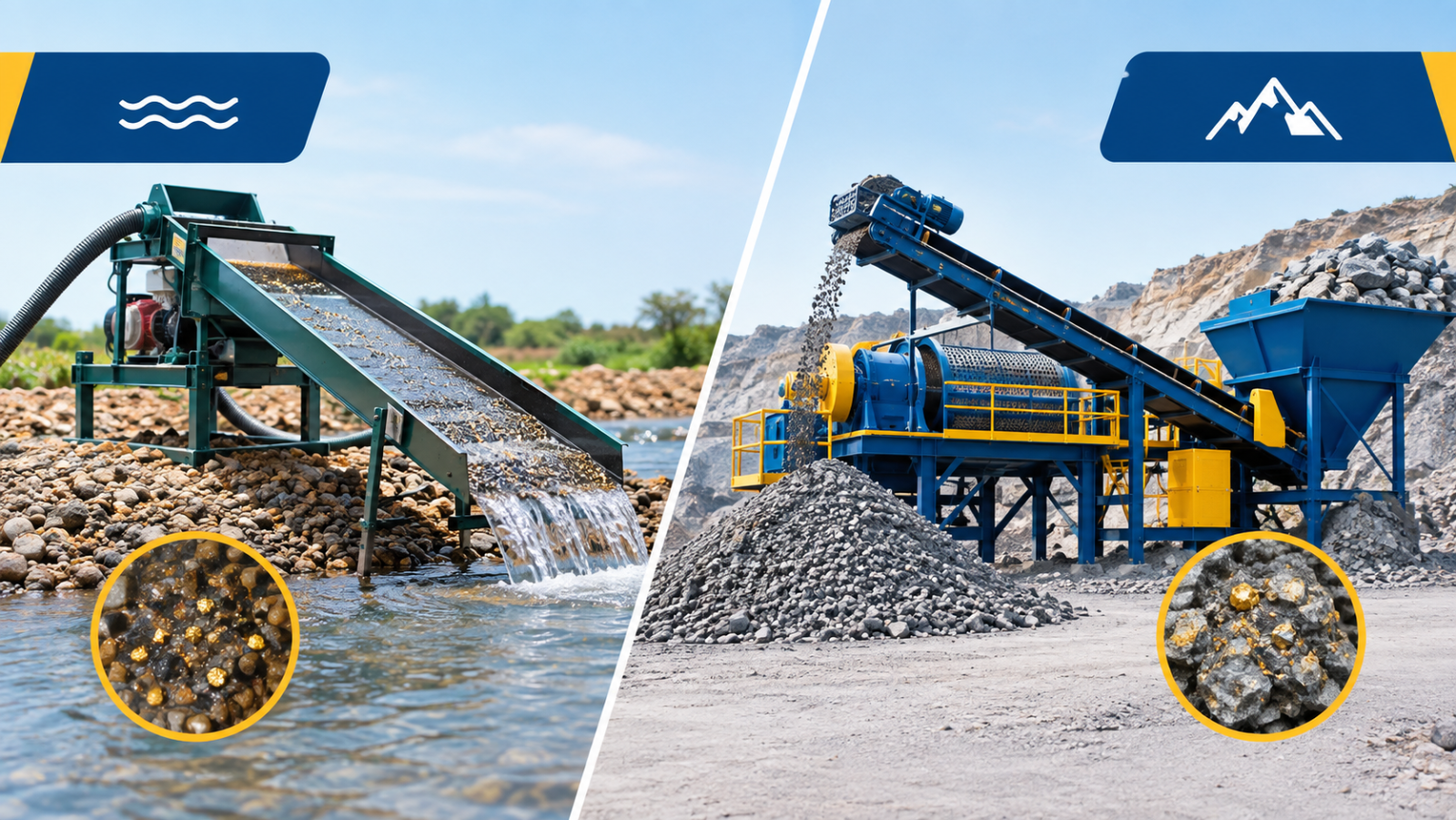
The two setups share vocabulary but very little equipment. Understanding the difference avoids buying a plant that cannot process your ore.
People often ask for "a wash plant" without specifying whether the gold is locked in rock or already liberated in gravel. The answer changes almost every item on the equipment list.
In alluvial deposits, the gold is already free. The job is to wash away clay, screen out oversize and present the fines to a recovery device. That is why an alluvial plant is built around a feed hopper, a trommel or vibrating screen with strong spray, and a sluice, jig or centrifugal concentrator.
The most common mistake is underestimating clay. High-clay feed needs longer retention in the trommel and more water pressure than a sandy deposit, and a plant sized for one will choke on the other.
With hardrock ore, nothing can be recovered until the ore is crushed and milled to the point where gold particles are free. That means primary crushing, secondary crushing and milling ahead of any recovery equipment — a substantially heavier and more power-hungry train.
Alluvial plants live or die on water supply and recirculation. Hardrock plants live or die on installed power. Confirm both before selecting throughput, because either constraint will cap your plant regardless of what the nameplate says.
Have a representative sample assessed, and be honest about clay content, oversize and available water. A plant configured around real feed characteristics will out-produce a larger plant bought on specification alone.
Send us your requirement and we will come back with equipment options, lead times and pricing.