
Mining & Construction
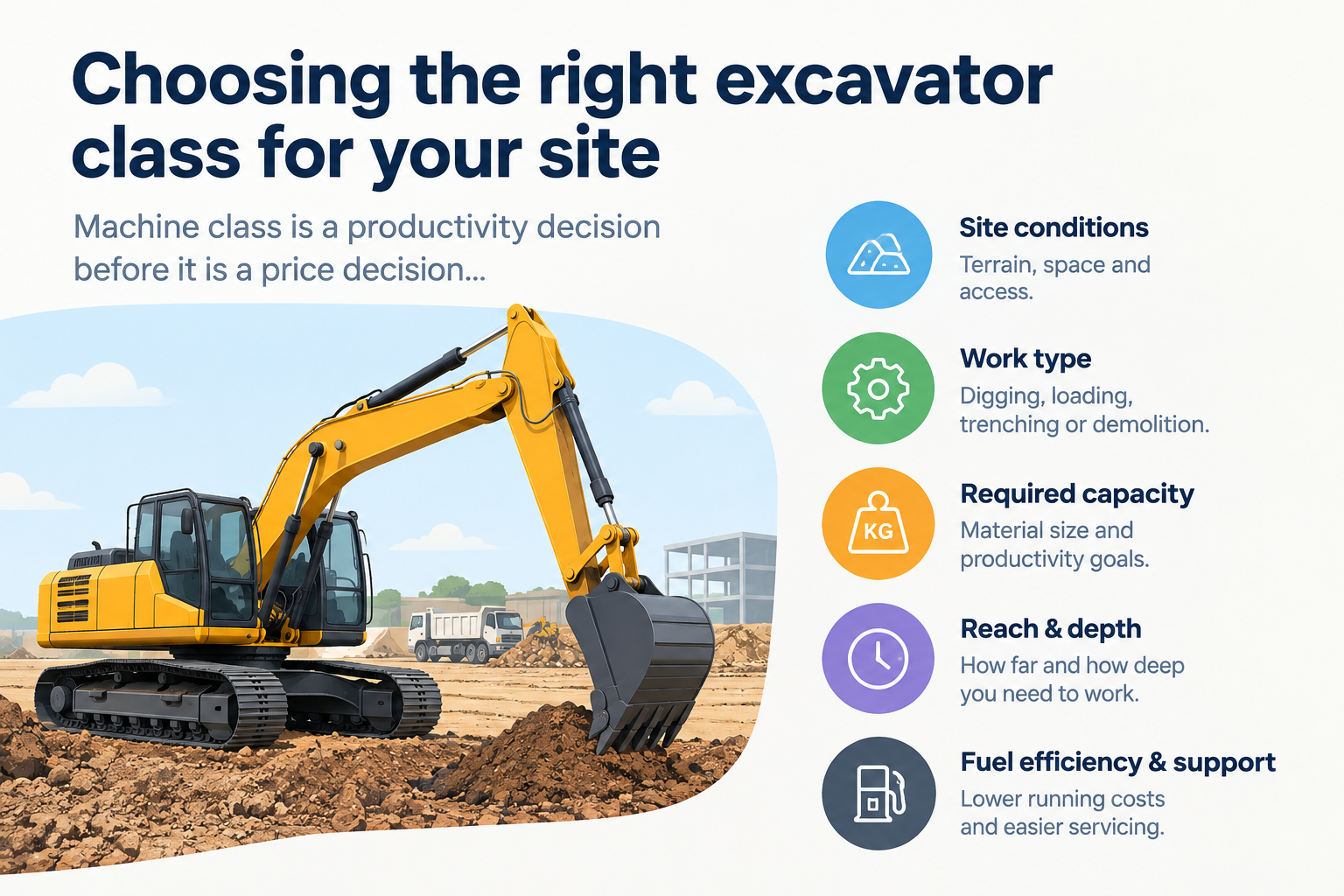
Choosing the right excavator class for your site
Machine class is a productivity decision before it is a price decision. Here is how to work out the class your site actually needs.
12 Jul 2026
2 min read
Vermont Group Limited
Buying an excavator one class too small is the most expensive saving on a site. The machine works flat out, cycle times stretch, fuel per tonne climbs and the undercarriage wears faster than it should. One class too large and you are paying to move a machine that never fills its bucket.
Start with the material, not the machine
Two questions decide most of it. What are you digging — free-running alluvial gravel, sticky clay, weathered rock or blasted rock? And where is it going — straight into a truck alongside, or up a bench?
Free-running material lets a smaller machine work at full cycle. Sticky and blocky material slows every pass, and that lost time compounds over a shift.
Match bucket to truck
A useful rule of thumb is three to five bucket passes to fill the truck you are loading. Fewer than three and you are shock-loading the truck body. More than five and the truck is waiting, which is where site productivity quietly disappears.
Watch the ground conditions
Soft, wet or tailings ground calls for wider shoes and a longer undercarriage. Getting this wrong does not just slow the machine — it damages it.
Then check what the machine costs to keep, not to buy
Undercarriage, filters, hydraulic oil and ground engaging tools are the real running cost. Before committing to any machine, confirm that parts for it are actually available in-country and what the lead time looks like.
If you would like help sizing a machine against your site conditions, send us the material type, target production and haul arrangement and we will come back with a recommendation and a quotation.
Need this specified and quoted?
Send us your requirement and we will come back with equipment options, lead times and pricing.
Related reading